|
|
|
|
|
| Floats | Sinkers |
 |
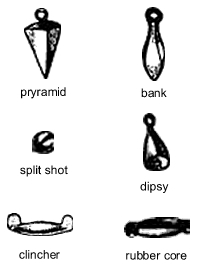 |
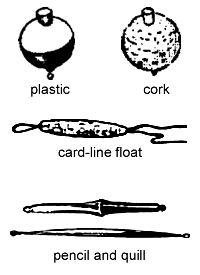
Still-fishing: The simplest of fishing methods can also be the most effective. As its name implies, still-fishing is a matter of putting your bait in the water and waiting for a fish to find it. This method will catch most kinds of fish and can be used from a boat, a dock, a jetty or from shore. Depending on water depth and what you’re trying to catch, you may want to still-fish near the surface, at a mid-water depth, or right down on the bottom. Using a float, or bobber, makes it easy to fish near the surface, or you can add sinkers to your line to fish deeper.
Casting: The term “casting” actually has two meanings in fishing. It describes the act of using a rod, reel and line to carry your bait or lure out into the water. It also is a specific fishing method, as opposed to still-fishing and other methods we’ll describe here.
|
Spinners |
Spoons |
Spinner
Baits |
 |
 |
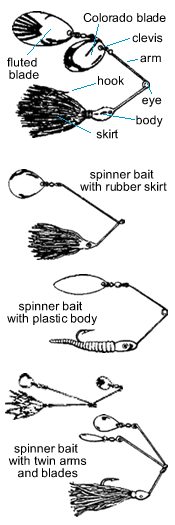 |
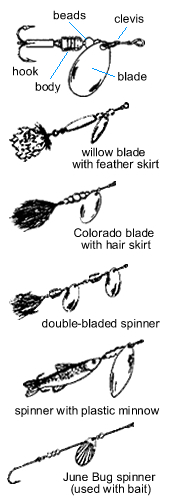
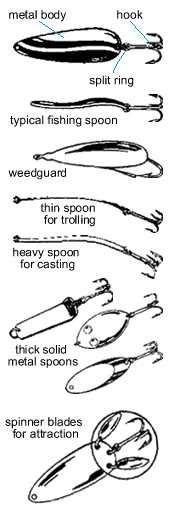
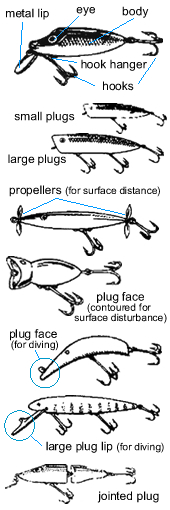
There are times when a moving lure works best, especially for some fish species. At other times you may want to place a lure in a particular spot, such as right next to a submerged stump 30 feet from shore or under a tree that’s leaning out over the water. These situations are when casting is the fishing method that offers the best chance of catching fish. It’s the kind of fishing where you cast and retrieve, usually with an artificial lure, to fish waters where fish might be lurking and to coax them into striking. Spinners, wobbling spoons, plugs and spinner baits are lures commonly used for casting.
Trolling: Many of the lures used in casting also work for trolling, because it’s another fishing method that requires movement to be effective. Trolling is simply dragging a lure, bait or a bait-and-lure combination through the water, using a boat rather than casting and retrieving to provide movement.
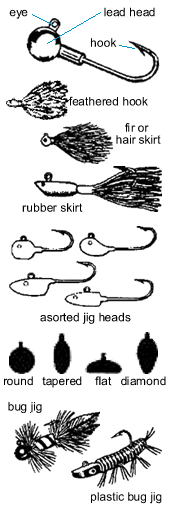
Jigging: Some artificial lures function best if they’re worked through the water in an up-and-down motion, commonly referred to as jigging. Lifting and dropping the rod tip is what provides the jigging motion. Lead heads are the most common kind of jig, but for some fish species, especially saltwater salmon and bottom fish, the jigging lure might be a long, thin, slab of lead or other metal in the shape of a herring or other baitfish.
|
Plugs |
Jigs |
Artificial
Flies |
 |
 |
 |